
1. The Biochemistry of Meat Processing Additives: Yield Optimization & Protein Matrix Engineering
In modern industrial meat processing—spanning further-processed poultry, cured pork items, emulsified sausage lines, and restructured beef steaks—the application of specialized meat processing additives is driven by muscle protein biochemistry. At the heart of yield maximization is the extraction and activation of myofibrillar proteins, specifically actin and myosin. Raw meat muscle naturally undergoes post-mortem pH declines, bringing protein structures closer to their isoelectric point (~pH 5.1 to 5.3), where net electrical charges drop to zero and water-holding capacity (WHC) is severely compromised.
Formulating with high-purity alkaline phosphates, functional salt matrices, ionic strength modifiers, and bio-based hydrocolloids shifts the ionic environment. By elevating the pH toward 6.0–6.4 and increasing ionic strength, functional additives create steric hindrance and electrostatic repulsion between protein filaments. This structural expansion allows the muscle protein lattice to entrap free moisture and solubilized lipids tightly, directly translating to enhanced green yields, reduced purge during vacuum packaging, and minimized drip loss during freeze-thaw cycles.
Technical Knowledge Gain: Myofibrillar Protein Solubility & Ionic Strength
Optimum myofibrillar protein extraction occurs when salt (NaCl or KCl) concentration reaches 2.0% to 3.0% in the aqueous phase, working synergistically with sodium tripolyphosphate (STPP) at 0.3% to 0.5%. This specific chemical environment dissociates the actomyosin complex into soluble actin and myosin, creating a sticky exudate that forms a irreversible gel matrix upon thermal processing (cooking).
2. Comprehensive Product Recommendations & Formulation Matrix
Selecting the ideal industrial additive requires balancing functionality, target shelf-life, cost-in-use, label claims, and regulatory limits. ICI Foods supplies an extensive portfolio of audited, high-purity additives tailored for commercial processors:
A. Functional Phosphates & Alkaline pH Modifiers
Phosphates remain the industry standard for optimizing WHC, preventing lipid oxidation by chelating pro-oxidant transition metal ions (such as Fe2+), and improving textural firmness.
- Sodium Tripolyphosphate (STPP - Food Grade / Anhydrous): Fast-dissolving phosphate optimized for brine injection in whole-muscle poultry, hams, and roasts. Prevents precipitation in cold brine tanks.
- Tetrasodium Pyrophosphate (TSPP): High-alkalinity phosphate providing rapid protein solubilization, ideal for fine-comminuted sausage batters (frankfurters, bologna) and high-yield emulsified meats.
- Sodium Acid Pyrophosphate (SAPP): Lower pH functional phosphate used primarily as a color accelerator and acidulant in cured meat applications and fermented dry sausage products.
- Potassium Phosphate Blends (Low-Sodium Formulations): Specially formulated for sodium-reduced meat products without sacrificing protein activation or brine solubility.
B. Clean-Label Binders, Hydrocolloids & Emulsifiers
For processors targeting clean-label claims or replacing traditional synthetic phosphates, natural hydrocolloids and plant-derived proteins provide structural integrity, oil encapsulation, and purge control.
- Refined & Semi-Refined Kappa/Iota Carrageenan: Thermally reversible gelling hydrocolloids that bind free moisture in cooked deli turkey, hams, and restructured roasts, suppressing purge throughout 90+ days of refrigerated shelf life.
- Functional Food Starches (Native & Modified Potato, Tapioca, Corn): Cold-swelling and cook-up starches designed to withstand high-shear vacuum tumbling and aggressive thermal processing. Excellent freeze-thaw stability for frozen meat patties and cooked poultry fillets.
- Transglutaminase (TG Enzyme - Meat Glue): Catalyzes isopeptide bonds between glutamine and lysine amino acid residues, enabling thermal-stable binding of fresh muscle cuts without requiring added salt or thermal activation.
- Isolated Soy Protein (ISP) & Pea Protein Concentrates: High-protein binders providing strong emulsification capacity in comminuted products while increasing total formulation protein percentage.
C. Antimicrobial Systems & Natural Shelf-Life Extenders
Controlling pathogen growth (particularly Listeria monocytogenes, Salmonella enterica, and Clostridium perfringens) is vital for ready-to-eat (RTE) meat products and extended-shelf-life fresh meats.
- Buffered Vinegar Powders (Sodium & Potassium Formats): Clean-label antimicrobial organic acid salts that disrupt bacterial cell transmembrane potential, offering robust Listeria suppression without negatively impacting sensory profiles.
- Sodium Lactate / Potassium Lactate Blends (60% Concentrates & Dry Powders): Industry-standard humectant antimicrobials that lower water activity ($a_w$) and delay oxidative rancidity.
- Cultured Dextrose & Celery Powders: Bio-fermented ingredients rich in natural organic acids and naturally occurring nitrates for clean-label cured meat safety protocols.
D. Curing Agents, Accelerators & Antioxidant Extracts
- Sodium Nitrite (Prague Powder / Curing Salt Formulations): Micro-dosed curing agent essential for fixed pink cure color development (nitroso-myoglobin formation), characteristic cured flavor, and absolute inhibition of Clostridium botulinum spore germination.
- Sodium Erythorbate & Ascorbic Acid: Potent reducing agents (curing accelerators) that speed up the chemical reduction of nitrite to nitric oxide, ensuring rapid, uniform cure color development while reducing residual nitrite levels.
- Rosemary Extracts & Acerola Cherry Powder: Natural phenolic antioxidants that scavenge free radicals, preserving color brightness in ground fresh beef/pork and delaying warmed-over flavor (WOF) in pre-cooked meat items.
| Additive Category | Primary Chemical/Ingredient | Typical Inclusion Level (% w/w) | Primary Technical Function | Target Meat Applications |
|---|---|---|---|---|
| Alkaline Phosphates | Sodium Tripolyphosphate (STPP) | 0.30% – 0.50% (USDA Max 0.5%) | Elevates pH, solubilizes myosin, maximizes WHC & cook yield | Brine-injected turkey breasts, hams, beef roasts |
| Clean-Label Antimicrobial | Buffered Potassium Vinegar Powder | 0.50% – 1.50% | Listeria monocytogenes control, clean-label shelf-life extension | Ready-to-eat (RTE) sliced deli meats, cooked sausages |
| Natural Gelling Matrix | Kappa-Carrageenan (Food Grade) | 0.25% – 0.75% | Thermal gelation, traps moisture, eliminates package purge | Deli hams, poultry rolls, low-fat sausages |
| Enzymatic Binder | Transglutaminase (TG Enzyme) | 0.10% – 0.30% | Crosslinks glutamine & lysine; binds fresh meat without heat | Restructured beef tenderloins, bacon wraps, fresh trim binding |
| Curing Accelerator | Sodium Erythorbate | 0.04% – 0.05% (550 ppm max) | Accelerates nitrosomyoglobin formation, controls lipid oxidation | Bacon, frankfurters, cured hams, pepperoni |
| Clean-Label Curing | Cultured Celery Juice Powder | 0.20% – 0.80% | Natural nitrate source for bio-converted clean-label curing | Uncured organic bacon, natural deli turkey, craft sausages |
| Functional Starch | Modified Potato Starch (Cross-linked) | 1.50% – 4.00% | Viscosity builder, freeze-thaw water retention, binder | Meatballs, ground meat patties, economical sausages |
Production Efficiency
Optimizing Brine Stability & Tumbling Kinetics
In modern commercial processing, brine preparation is as critical as ingredient selection. Poorly soluble phosphates or hydrocolloids can precipitate in injection mixing tanks, clogging micro-needles and causing non-uniform cure distribution, striping, or soft pockets in finished meats.
Our technical support team works directly with plant engineers to optimize addition sequences: adding phosphates first to pure water to guarantee complete hydration before introducing salt (NaCl), followed by functional starches, protein isolate binders, and organic acid antimicrobials.
- Instantized, non-dusting phosphate granules for rapid cold-water dissolution
- Cold-water dispersible carrageenan grades engineered for low viscosity under shear
- Custom pre-blended batch packs designed for your facility's exact tank capacity
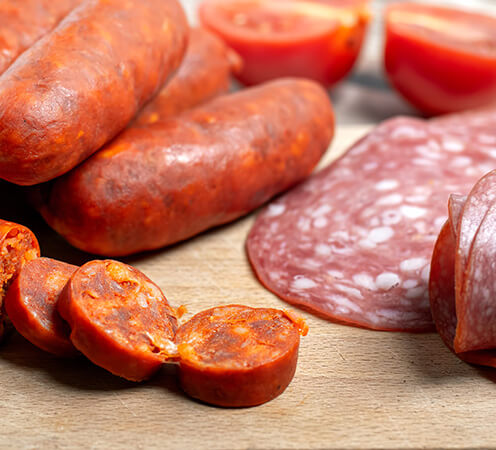
3. Technological Innovations & Advanced R&D Trends in Meat Additives
The global meat processing market is undergoing a structural evolution, driven by consumer demands for cleaner ingredient decks, stringent regulatory caps on synthetic sodium and nitrites, and the rapid expansion of hybrid meat-plant protein formulations.
A. Microencapsulation Technology for Organic Acids and Acidulants
Direct addition of un-encapsulated organic acids (such as citric acid, lactic acid, or glucono-delta-lactone - GDL) into raw meat batters causes immediate denaturation of muscle proteins, leading to premature coagulation, loss of WHC, and mushy textures. Microencapsulation coats active acid molecules in hydrogenated vegetable oil matrices with precise melting points (e.g., 58°C to 65°C). The acid acidulant remains completely inert during mixing, vacuum tumbling, and stuffing. Only during the thermal smokehouse cycle does the lipid wall melt, releasing the acid at the exact moment required for rapid pH drop, microbial kill, and casing release in dry and semi-dry fermented sausages (pepperoni, summer sausage).
B. Bio-Preservatives & Next-Generation Antimicrobial Peptides
Replacing chemical preservatives like sodium benzoate and potassium sorbate, food scientists are leveraging bacteriocins like Nisin and Pediocin alongside protective lactic acid bacteria cultures (LAB). These naturally derived antimicrobial peptides create targeted ion channels in cell membranes of Gram-positive pathogens, neutralizing spoilage bacteria while maintaining a completely clean label.
C. Phosphate-Free Texture & Water-Retention Systems
As retailers enforce stricter "no-phosphate" blacklist policies, processors are adopting synergized natural matrices. Combining citrus fiber (rich in insoluble structurally complex cellulose networks) with high-gelation native starches and sodium bicarbonate achieves a high WHC comparable to traditional STPP, expanding muscle bundle gaps naturally without synthetic chemical classification.
4. Global Procurement & Sourcing Trends for Meat Processing Additives (2026+)
Sourcing meat additives globally requires navigating dynamic market conditions, shifting supply chains, and evolving regional regulatory compliance framework. Procuring managers and technical directors must adapt to four critical procurement trends:
Key Procurement Shift: Sodium Reduction Directives
Global health authorities (including WHO, FDA, and EFSA) continue to tighten voluntary and mandatory target levels for sodium in processed meats. Global buyers are increasingly transitioning from standard sodium-based additives to potassium-based counterparts:
- Replacing Sodium Tripolyphosphate with Potassium Pyrophosphate
- Swapping Sodium Lactate for Potassium Lactate/Acetate blends
- Utilizing Potassium Chloride (KCl) modified with natural debittering agents to replace up to 40% of NaCl in brine solutions
Global Supply Chain Resilience & Multi-Sourcing Strategies
Geopolitical shifts, raw material cost fluctuations, and maritime freight vulnerabilities have exposed the risks of single-source procurement models. Tier-1 processors are locking in long-term supply agreements with established distributors who maintain localized inventory buffers. ICI Foods mitigates supply chain disruption by housing comprehensive safety stock across strategic North American warehousing hubs, backed by redundant sourcing agreements with certified global chemical and botanical extract manufacturers.
5. Enterprise Advantage: Why Industry Leaders Partner with ICI Foods
For over 50 years, Industrial Commodities Inc. (ICI Foods) has served as an indispensable B2B supply chain partner for food and beverage manufacturers. When sourcing specialized meat processing additives, our clients gain distinct technical, operational, and financial advantages:
- 50+ Years of Deep Industry Domain Knowledge: Founded in 1976, our technical specialists possess unmatched expertise across meat chemistry, bakery systems, dairy hydrocolloids, and industrial food applications.
- Uncompromising Food Safety Compliance: All supplier facilities within our 200+ audited manufacturer network maintain rigorous GFSI-benchmarked certifications (SQF, BRCGS, FSSC 22000) alongside complete FSMA compliance.
- Just-In-Time (JIT) Supply Chain & Logistics: Avoid costly plant downtime or excessive working capital tied up in inventory. We deliver customized JIT replenishment programs matched to your production schedules.
- Formulation & Regulatory Documentation Support: We supply full technical documentation packages with every shipment: COA, SDS, Allergen Declarations, Non-GMO verification, Kosher/Halal certifications, and USDA regulatory guidance.
- Custom Pre-Blended Batch Packaging: Reduce batching errors on the plant floor by leveraging pre-weighed, batch-sized bags tailored to your mixer or brine tank capacities.

Procurement & Technical Support
Frequently Asked Questions (FAQ) for Meat Additives Sourcing
Technical answers to common questions asked by corporate purchasing agents, food scientists, and quality assurance directors.
Q1: What are the maximum regulatory usage limits for phosphates in USDA-inspected meat products?
Under USDA-FSIS regulations (9 CFR 424.21), the maximum allowable concentration of approved sodium or potassium phosphates in finished meat and poultry products is 0.5% (5,000 ppm) of the total product mass. Exceeding this limit can result in regulatory non-compliance, severe soapy off-flavors, rubbery texture, and crystalline efflorescence on finished product surfaces.
Q2: How does buffered vinegar function as a clean-label antimicrobial, and what is its sensory impact?
Buffered vinegar consists of acetic acid buffered with sodium or potassium hydroxide to a neutral pH (~5.5 to 6.0). When ingested by pathogenic microbes like Listeria monocytogenes, undissociated acetic acid molecules cross the microbial membrane, lowering internal cellular pH and inhibiting metabolic enzyme pathways. Because it is buffered, it provides powerful antimicrobial protection without imparting harsh, sharp vinegar taste or lowering raw meat pH.
Q3: Can hydrocolloids completely replace phosphates in processed poultry and red meat?
While hydrocolloids like carrageenan, modified potato starch, and xanthan gum excel at entrapping free water during thermal processing, they do not elevate muscle pH or extract native myofibrillar proteins like phosphates do. Therefore, high-performing phosphate-free formulations typically combine natural pH boosters (such as sodium bicarbonate or citrus fiber) with gelling carrageenan and functional starches to mimic total phosphate functionality.
Q4: What is the shelf life and ideal storage requirement for industrial bulk additives?
Most dry powdered meat additives (phosphates, modified starches, sodium erythorbate, buffered vinegar powders) feature a recommended shelf life of 24 to 36 months from the date of manufacture when stored unopened in cool, dry conditions (temperature < 25°C / 77°F and relative humidity < 65%). Hygroscopic materials like polyphosphates and lactates must be kept in sealed, moisture-barrier multi-wall bags to prevent clumping.
Q5: What standard B2B packaging formats and Minimum Order Quantities (MOQ) does ICI Foods provide?
We offer flexible commercial packaging formats ranging from 25 kg (55.1 lb) multi-ply kraft paper bags with polyethylene moisture barriers, to 1,000 kg tote sacks, and customized pre-measured batch pouches. Standard MOQs begin at one full pallet (approx. 2,000 lbs / 900-1,000 kg), with mixed-product consolidation available across our distribution center network.
Accelerate Your Meat Processing Performance Today
Partner with ICI Foods for high-purity additives, expert formulation guidance, and dependable bulk distribution.