
Commercial canning remains one of the most rigorously regulated sectors within global food manufacturing. Achieving long-term microbiological stability while maintaining crisp texture, vibrant natural colors, and authentic flavor profiles requires a deep chemical understanding of thermal death kinetics, heat transfer dynamics, water activity ($a_w$), and pH buffering. As a premier canning ingredients supplier with over 50 years of industry experience, ICI Foods bridges the gap between raw material science and large-scale cannery production.
Whether your facility manufactures high-acid canned fruits, low-acid vegetable preserves, thermal-processed soups and sauces, or meat and seafood formulations, selecting the appropriate industrial-grade additives is vital. This guide delivers comprehensive insights into ingredient functionality, retort-stable polymers, regulatory compliance frameworks, and global supply chain strategies designed to prevent costly batch failures and optimize processing efficiency.
1. Recommended Canning Ingredients: Technical Functionality & Application Matrices
Thermal sterilization (retorting at temperatures typically between 115°C and 130°C / 240°F to 266°F) exerts extreme shear, heat, and pressure stress on food matrices. Standard food additives often degrade under these conditions, leading to phase separation, syneresis, loss of viscosity, or off-flavors. Below is an evaluation of primary ingredient categories specifically curated for industrial canning environments.
Acidulants & pH Regulators
pH control is the fundamental boundary condition in commercial thermal processing. Under US FDA regulations (21 CFR Part 114) and global Codex Alimentarius standards, acidifying low-acid foods to an equilibrium pH of 4.6 or below prevents the germination and outgrowth of Clostridium botulinum spores, allowing for milder thermal schedules.
- Citric Acid (Anhydrous / Monohydrate): Rapid acid release and excellent buffering capacity; standard choice for fruit canning, tomato products, and pickled vegetables.
- Malic Acid: Provides a smooth, persistent sour taste profile that masks metallic notes often associated with tinplate or aluminum cans. Ideal for fruit preserves and canned beverages.
- Glucono-Delta-Lactone (GDL): A slow-release acidulant that hydrolyzes to gluconic acid upon heating, delivering precise control over acid development without causing pre-retort protein coagulation.
Retort-Stable Starches & Hydrocolloids
Viscosity control during canning involves a delicate balance: low viscosity pre-retort allows fast heat penetration (reducing cook time and energy consumption), while high viscosity post-cooling provides the desired mouthfeel and suspension of particulates.
- Modified Food Starches (Cross-Linked & Hydroxypropylated): Derived from waxy maize or tapioca, these starches exhibit superior resistance to low pH, high shear (pumping/filling), and intense thermal retort cycles. They prevent syneresis over a 36-month shelf life.
- Xanthan Gum & Guar Gum Blends: Provide pseudoplastic rheology (shear-thinning), ensuring high-speed line filling without splash loss, followed by instant viscosity recovery inside the can.
- High-Methoxy (HM) & Low-Methoxy (LM) Pectins: Critical for jams, jellies, and fruit-in-syrup products, maintaining gelling networks under acidic thermal processing.
| Ingredient Category | Specific Additive | Primary Cannery Function | Thermal & pH Stability Threshold | Recommended Inclusion Level |
|---|---|---|---|---|
| Acidulant | Citric Acid Anhydrous | pH reduction (< 4.6), pathogen control, flavor enhancement | Stable up to 150°C; effective pH 2.0 – 5.5 | 0.10% – 0.80% w/w |
| Firming Agent | Calcium Chloride (USP/FCC) | Cross-linking pectin structure; preventing softening of canned tomatoes/beans | Thermally inert; stable across all retort ranges | 0.02% – 0.05% (as Ca²⁺ ion) |
| Retort Starch | Distarch Phosphate (Waxy Maize) | Thickening soups/sauces, controlling heat transfer rates | Extremely high heat/acid/shear resistance (pH > 3.2) | 1.50% – 4.50% w/w |
| Antimicrobial | Sodium Benzoate / Potassium Sorbate | Secondary mold/yeast suppression in acidic canned condiments | Deactivates above 120°C; best added pre-seal in thermal hot-fill | 0.05% – 0.10% w/w |
| Chelating Agent | Disodium EDTA | Sequestration of trace metal ions (Fe, Cu) to prevent discoloration & turbidity | Heat stable; optimal in pH range 4.0 – 7.0 | Max 165 ppm (FDA limit) |
Firming Agents & Mineral Salts
Thermal sterilization destroys plant cell wall integrity by degrading intracellular pectin networks via thermal beta-elimination. Adding divalent cations, specifically food-grade Calcium Chloride or Calcium Lactate, forms insoluble calcium pectate bridges within the middle lamella. This reaction preserves structural crispness in canned tomatoes, diced peppers, cucumbers, and legumes, preventing mushy textures during storage.
Additionally, specialized commercial salts (high-purity NaCl free of heavy copper or iron impurities) are mandatory to avoid catalysis of lipid oxidation and dark ring formation around the interior rim of metal containers.
2. Global Procurement Trends in the Canning Industry (2026–2030)
The global canning and thermal preservation market is undergoing structural shifts driven by evolving consumer expectations, geopolitical supply risks, and heightened carbon-neutrality mandates. Procurement directors and R&D executives must align their supply chains with four macro trends:
A. Transition to Clean-Label & Synthetic-Free Additives
Modern consumers actively scan ingredients lists for recognizable components. In response, global canners are replacing synthetic chelating agents like EDTA with natural alternatives such as De-oiled Sunflower Lecithin, Buffered Vinegar Powders, and Sodium Citrate. Furthermore, modified chemical starches are increasingly swapped for physically modified (hydrothermal treatment) clean-label starches that deliver heat-and-acid resistance equal to traditional E-numbered starches.
B. Energy-Optimized Rheology for Rapid Thermal Processing
With industrial energy costs fluctuating, thermal processing efficiency directly impacts profitability. Modern procurement strategies prioritize smart-viscosity hydrocolloids. These specialized starch-gum combinations remain thin during the initial heating phase inside the continuous or batch retort, allowing rapid convective heat transfer to reach the target $F_0$ lethality value quickly. Once the thermal hold phase is complete, the hydrocolloids hydrate fully upon cooling, building final target viscosity without scorching or extended kettle cook times.
C. Dual-Sourcing & Regionalized Safety Stock Buffer Networks
Over-reliance on single-source offshore suppliers for critical functional ingredients—such as citric acid, xanthan gum, or nisin—exposes canning plants to severe vessel delays and container line stoppages. Leading global canners are instituting strict 70/30 dual-sourcing models backed by domestic warehousing hubs. Partnering with a multi-facility distributor like ICI Foods ensures localized inventory allocation, eliminating production downtime caused by global shipping disruptions.
Key Procurement Takeaway for Strategic Buyers
In thermal canning, ingredient specification changes impact heat penetration curves ($f_h$ and $j_h$ values). Purchasing agents should never switch ingredient suppliers based on raw unit cost alone without requesting technical validation data, batch-to-batch viscosity specifications, and FDA Process Authority approval assistance.
3. Technology & Formulation Trends in Canning Ingredients
Product development teams in the canning sector are moving beyond standard preservation to craft high-value, functional, and gourmet canned offerings. Key formulation innovations include:
Sodium Reduction Without Flavor Loss
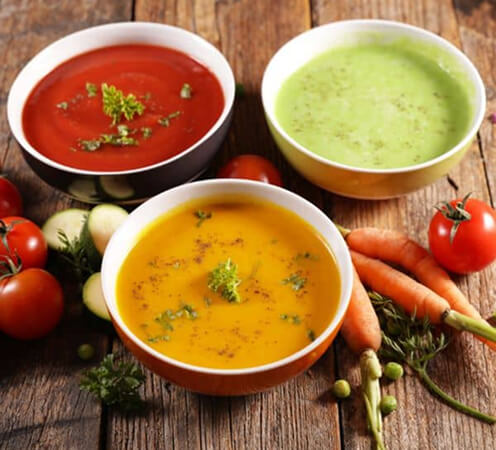
High salt levels historically aided preservation and masked off-notes in thermal processing. Today, food engineers utilize Yeast Extracts, Potassium Chloride (KCl), and Monosodium Glutamate (MSG) alternatives to reduce sodium by 30% to 50% in canned soups, gravies, and ready meals without compromising micro-stability or consumer palatability.
Plant-Based Protein Integration in Canned Meals
The rise of canned plant-based chili, stews, and ready-to-eat meals presents complex emulsification challenges. Plant proteins (pea, soy, faba bean) tend to denature and precipitate during high-pressure retorting. Canners utilize tailored Dairy Lactose Carriers, Mono- and Diglyceride Emulsifiers, and Carrageenan networks to stabilize fat-water emulsions and maintain a smooth, non-gritty texture throughout extended ambient storage.
Sugar Reduction in Fruit Canning & Syrups
Traditional heavy sugar syrups (65°+ Brix) served to lower water activity ($a_w$) and maintain fruit firming via osmotic balance. Modern consumers prefer fruits packed in light syrup or natural juice. To maintain fruit plumpness and prevent osmotic leaching, formulators use high-potency natural sweeteners combined with Low-Viscosity Polydextrose or Inulin to rebuild solids and mouthfeel without excessive calories.

4. Frequently Asked Questions (FAQ) for Industrial Canning Procurement & R&D
Acidulants directly influence microbial heat resistance by lowering the environmental pH. Microbial thermal destruction follows first-order kinetics, characterized by the $D$-value (time required to reduce a population by 90% at a specific temperature) and $Z$-value (temperature change required for a tenfold change in $D$-value). At a pH below 4.6, bacterial endospores such as C. botulinum become incapable of germinating and producing toxins. This enables processing under Acidified Food Regulations (21 CFR 114) at temperatures around 90°C–100°C (atmospheric pasteurization) rather than full pressure retorting at 121.1°C ($250°F$), saving energy and preserving food texture and nutrients.
For high-acid canned foods (pH < 4.2 such as tomato sauces or fruit preparations), hydroxypropylated cross-linked waxy maize starches (distarch phosphate) are mandatory. The chemical cross-linking stabilizes the starch granule against acid hydrolysis and high shear during retorting. For low-acid canned foods (pH > 4.6 such as cream soups, vegetable gravies, or meat sauces), cross-linked starches with moderate esterification provide robust freeze-thaw stability and prevent syneresis over multi-year ambient storage.
During steam autoclaving, high thermal energy cleaves the ester bonds of native pectin in plant cell walls via a non-enzymatic reaction called $\beta$-elimination. This structural breakdown causes vegetables to become soft and mushy. Food-grade Calcium Chloride ($CaCl_2$) dissociates into calcium ions ($Ca^{2+}$), which react with free carboxyl groups on de-esterified pectin molecules to form a rigid, three-dimensional "egg-box" gel network. This ionically cross-linked matrix reinforces the middle lamella, maintaining vegetable crispness despite intense heat exposure.
To comply with US FDA FSMA (Food Safety Modernization Act), GFSI guidelines, and global import regulations, every ingredient batch must be accompanied by:
- Certificate of Analysis (COA): Specifying assay purity, moisture, heavy metals (Pb, As, Cd, Hg), micro limits, and mesh size.
- Safety Data Sheet (SDS): Compliant with GHS standards.
- Technical Data Sheet (TDS): Outlining functional parameters and recommended process thresholds.
- Allergen & GMO Statements: Confirming absence of cross-contamination.
- Third-Party Food Safety Certificates: SQF, BRCGS, or FSSC 22000 accreditation from the manufacturing site.
- Process Authority Letters: Where applicable for specialized functional additives.
Sucrose and glucose syrup perform a dual role: they impart sweetness and lower water activity ($a_w$) by binding free water molecules through hydrogen bonding. When reformulating to low-sugar or sugar-free canned fruit preserves, high-potency sweeteners (sucralose, stevia) provide sweetness but fail to lower $a_w$ or contribute dissolved solids. Formulators must incorporate bulk polyols (e.g., Erythritol, Sorbitol) or soluble fibers (Polydextrose) to achieve an identical osmotic pressure and $a_w$ profile (< 0.85), preventing moisture migration from syrup into fruit tissues and ensuring resistance to xerophilic yeasts.
Bulk hydrocolloids (xanthan, guar, starches) and crystalline acidulants (citric acid, malic acid) are highly hygroscopic. If exposed to relative humidity (RH) above 60% or ambient temperatures exceeding 25°C ($77°F$), particles undergo moisture absorption leading to agglomeration and caking. Cannery storage areas must maintain controlled climatic conditions (RH < 50%, temperature 15°C–22°C). In high-humidity coastal canning operations, ingredients should remain in sealed multi-wall paper bags with polyethylene liners on heat-treated ISPM-15 wooden or plastic pallets, elevated off floor surfaces.
5. Enterprise Advantages: Why Leading Canners Partner with ICI Foods
For over five decades, ICI Foods has served as a cornerstone of the North American and global food supply chain. We understand that in high-speed, automated canning operations, an unfulfilled ingredient order can halt an entire production line, incurring tens of thousands of dollars per hour in downtime costs. Our supply infrastructure is built around reliability, technical rigor, and operational transparency.
50+ Years of Deep Industry Experience
Established as Industrial Commodities Inc., our decades of specialized commodity and specialty ingredient knowledge empower us to navigate global market volatility, crop shortages, and regulatory shifts smoothly, securing uninterrupted supply for our manufacturing partners.
SQF & GFSI-Certified Supply Base
Food safety is non-negotiable. Every supplier within the ICI Foods vendor network undergoes thorough vetting, annual audit verifications, and strict quality control evaluations. We provide full lot-traceability for every bag, tote, or bulk tanker delivered to your receiving docks.
Just-In-Time (JIT) Logistics & Strategic Warehousing
Holding vast quantities of raw ingredient inventory places a burden on working capital and plant warehouse space. ICI Foods operates strategically located distribution hubs across North America. Our JIT delivery capabilities ensure your raw materials arrive exactly when required by your production schedule, minimizing holding costs while insulating your plant against supply delays.
Dedicated Technical & Application Support
We do not merely take orders; we solve complex formulation challenges. Our technical specialists collaborate with your R&D and Quality Assurance teams to recommend optimal starch modifications, calculate precise acidulant buffering ratios, and troubleshoot line issues such as heat-induced phase separation or container corrosion.
Accelerate Your Commercial Canning Sourcing Today
Connect with our technical ingredient specialists to request sample packs, technical documentation, or customized volume pricing tailored to your cannery's exact production requirements.
Contact Us