

Industry Insights
Food & Beverage Ingredient Blog
Formulation guides, ingredient sourcing insights, and market trends from ICI Foods experts.
Who Is the Best Commercial Salt Supplier in China?
Table of Contents
- What Defines a Leading Commercial Salt Supplier in China?
- Key Salt Products and Industries Served by Chinese Suppliers
- Quality Standards, Certifications, and Supply Reliability
- How to Compare Commercial Salt Suppliers in China
- Factors to Consider When Choosing a Supplier for Your Business
- FAQS
- Conclusion
- Related Posts
Choosing the best Commercial Salt Supplier in China takes more than comparing quoted prices. Salt historian Mark Kurlansky writes, “Salt is the only rock directly consumed by humans.” That simple observation points to a serious responsibility: a supplier’s product must suit its intended use, arrive consistently, and come with clear documentation.
A dependable supplier should explain where its salt comes from, how it is processed, and which grades it can provide. Buyers can examine sample specifications, certificates of analysis, packaging options, and batch traceability. For example, moisture levels matter when bags must remain free-flowing during storage. Grain size matters when production equipment depends on a steady feed. Small details. Costly consequences.
China has many producers and trading companies, but not every seller offers the same level of technical support or quality control. Ask how the supplier handles specification changes, shipment checks, and complaints. Request recent test records, then compare them with your own requirements. A polished brochure is not proof. Neither is the lowest bid.
This guide outlines practical ways to assess a Commercial Salt Supplier, from product consistency to communication and delivery planning. It also recognizes an imperfect truth: even a capable supplier may not fit every buyer. The right choice depends on the application, required grade, order volume, and evidence the supplier can provide.
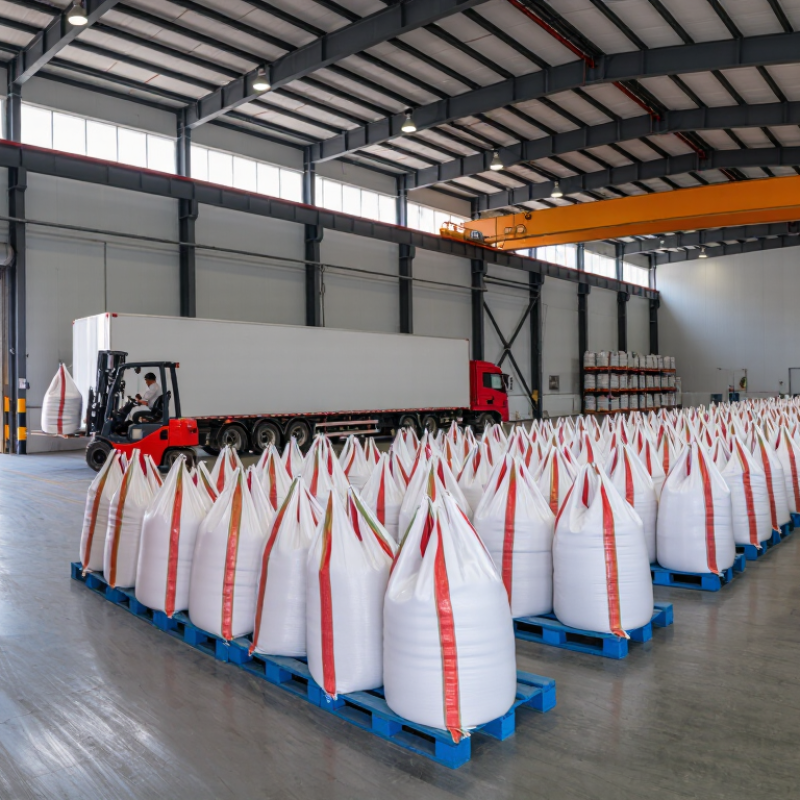
What Defines a Leading Commercial Salt Supplier in China?
Who Is the Best Commercial Salt Supplier in China?
What Defines a Leading Commercial Salt Supplier in China?
A leading commercial salt supplier is defined by more than low prices or polished catalogs. Real experience appears in consistent crystal size, controlled moisture, clean packaging, and dependable delivery. For food, water treatment, chemical, or industrial use, the supplier should explain grade differences clearly. Vague answers create costly mistakes.
Reliable suppliers provide batch records, product specifications, and recent laboratory test results. These documents should cover purity, insoluble matter, moisture, and particle size. Traceability matters too. Each shipment should connect to a production batch and inspection record. Factory audits, responsive communication, and stable export experience also show professional capability. A strong supplier does not hide limitations. No supplier is perfect.
Tips: Request a sample before placing a large order. Compare its color, flow, grain size, and packaging strength. Ask how moisture is controlled during storage. Check whether the supplier can maintain the same specification across several batches. Confirm pallet details, labeling, and loading photos. Small details matter.
A dependable partner also understands your application. Fine salt may suit a different process than coarse salt. Refined material may require stricter testing than general industrial salt. I would not judge quality from one successful shipment. Seasonal humidity, port handling, and warehouse conditions can change results. The best supplier welcomes questions, documents corrective actions, and keeps communication practical when problems appear.
Key Salt Products and Industries Served by Chinese Suppliers
Who Is the Best Commercial Salt Supplier in China?
Key Salt Products and Industries Served by Chinese Suppliers
Chinese commercial salt suppliers offer products for different production needs, rather than one universal grade. Common options include refined food-grade salt, industrial sodium chloride, sea salt, and salt brine. Product specifications may cover sodium chloride content, moisture, insoluble matter, grain size, and packaging. Small differences matter. A finer crystal may dissolve faster, while larger grains can suit particular processing methods.
Food manufacturers use salt in seasoning, pickling, and ingredient preparation, where consistent grain size and documented quality help maintain repeatable batches. Water-treatment facilities may use suitable salt for regeneration processes, while chemical manufacturers need grades that meet specific process requirements. Road-maintenance teams may also buy bulk salt for winter operations, depending on local climate and handling needs. Each application calls for its own checks.
A practical supplier review should begin with the intended use and a written specification. Buyers can request batch test reports, traceability details, packaging options, and clear information about storage and transport. A certificate alone may not answer every question; confirm that its results match the ordered grade. This part can take more time than expected. Even small changes in moisture or particle size may affect handling, so trial orders can reveal issues that paperwork misses.
Who Is the Best Commercial Salt Supplier in China?
Chinese commercial salt suppliers commonly serve chlor-alkali production, soda ash manufacturing, chemical processing, water treatment, food processing, and de-icing applications. A practical way to compare suppliers is to review product grade, sodium chloride content, compliance, packaging, and delivery capability.
The chart shows the minimum sodium chloride content for the three industrial salt grades defined in the Chinese standard GB/T 5462-2015. Higher-purity industrial salt is generally preferred for processes that require tighter control of impurities, while lower grades are commonly used in applications with less demanding purity requirements.
Data basis: GB/T 5462-2015, Industrial Salt. Values represent minimum NaCl content on a dry basis and are not company or brand data.
Quality Standards, Certifications, and Supply Reliability
A dependable commercial salt supplier is judged by more than a bright, uniform sample. For each application, request a current specification sheet covering sodium chloride content, moisture, insoluble matter, and particle size. Check that any certification is current, independently issued, and relevant to the product’s intended use. Certificates should identify the product and facility, not arrive as generic files with no clear scope. Ask how batches are sampled and how test results are recorded. Small details matter. Clumping in a storage bin can signal moisture trouble, while uneven grains may disrupt dosing or blending. These signs are not proof of poor quality, but they deserve a closer look.
Supply reliability shows up in routine operations. Confirm production capacity, typical lead times, packaging options, and plans for peak-season orders. Request batch traceability and a sample certificate of analysis before placing a large order. For bulk deliveries, clarify loading windows, transport protection, and who reports delays. A missed truck can stop a line. No supplier can promise a perfect schedule; weather, port congestion, and equipment failures still happen. Look for prompt, documented updates and a realistic recovery plan instead of polished assurances. When practical, visit the facility and compare quality records with the material delivered. Even careful checks have limits.
| Evaluation Dimension | What a Qualified Supplier Should Demonstrate | Evidence to Request | How to Compare Suppliers |
|---|---|---|---|
| Product grade and intended use | Salt should be specified for its intended application, such as industrial processing, water treatment, or food use. Requirements differ by grade and use. | Product specification, grade designation, intended-use statement, and a sample linked to the quoted product. | Compare suppliers against the same application and written specification; do not treat industrial salt as interchangeable with food-grade salt. |
| Applicable Chinese product standard | For products represented as industrial salt or edible salt, confirm the applicable standard and edition. Relevant national standards include GB/T 5462 for industrial salt and GB/T 5461 for edible salt. | Current product specification and test report identifying the standard and the tested product grade. | Check that the cited standard matches the product and use. Confirm the current edition and any applicable amendments before contracting. |
| Chemical composition and impurities | Purity, moisture, and impurity limits should be stated in the product specification and matched to the buyer’s process requirements. | Recent certificate of analysis (COA) with test methods, results, units, batch or lot number, and test date. | Compare actual results with agreed limits, not just a headline purity claim. Confirm whether tests are performed in-house or by an independent laboratory. |
| Particle size and physical condition | Granulation, appearance, moisture condition, and flow characteristics should be appropriate for the buyer’s handling and production equipment. | Particle-size distribution or agreed sieve range, product sample, and packaging or handling specification. | Use a common sampling and measurement method; confirm acceptable tolerances and how out-of-specification material is handled. |
| Quality management | A documented quality management system can support consistent production, inspection, and corrective action. | Valid ISO 9001 certificate, where held, with the certified legal entity, scope, issuing body, and validity dates. | Verify the certificate with its issuer or accreditation body. ISO 9001 is a management-system certification, not a guarantee of a particular salt specification. |
| Food-safety controls, if relevant | For edible or food-processing applications, assess food-safety controls and all applicable product and market requirements. | Relevant food-safety system documentation, product-specific compliance records, and required licenses or registrations for the transaction. | Confirm that documents cover the actual manufacturing site and product. Requirements depend on the product, destination, and intended use. |
| Batch traceability | Each shipment should be traceable to a production lot, inspection record, and relevant shipping documents. | Lot coding, production and inspection records, COA-to-lot linkage, and a documented complaint or recall process. | Ask the supplier to demonstrate how a delivered lot can be traced from production through dispatch. |
| Production and supply capacity | Capacity claims should be supported by a realistic production schedule and allocation plan for the buyer’s order volume. | Declared available capacity, lead-time schedule, production-site details, and a plan for peak-demand periods. | Compare confirmed capacity and achievable lead times rather than relying only on general annual-capacity claims. |
| Delivery reliability | Order confirmation, dispatch timing, shipment updates, and procedures for delays should be clearly defined. | Recent delivery-performance records where available, agreed lead times, shipment milestones, and escalation contacts. | Agree how on-time delivery is measured and review performance over a defined period using comparable orders. |
| Packaging and logistics | Packaging, loading, storage, and transport arrangements should protect the product and suit the delivery mode and destination. | Packaging specification, bag or bulk options, loading plan, moisture-protection details, and shipping-document checklist. | Confirm packaging tolerances, container or bulk-loading requirements, and responsibility for damage or contamination in transit. |
| Commercial terms and responsiveness | Quotations should specify grade, quantity, price basis, validity, delivery terms, payment terms, and any testing or documentation charges. | Written quotation, draft contract, sample approval process, and named contacts for quality and logistics matters. | Compare total delivered cost and contract clarity, not price alone; record how quickly and completely technical questions are answered. |
Selection principle: There is no single objectively “best” supplier for every buyer. Shortlist suppliers that meet the required grade and applicable standards, verify their documents and batch-level test results, and assess supply performance against your own volume, delivery, and destination requirements.
How to Compare Commercial Salt Suppliers in China
Who Is the Best Commercial Salt Supplier in China?
How to Compare Commercial Salt Suppliers in China
China is a major salt producer, but output alone does not identify the best commercial supplier. The U.S. Geological Survey’s Mineral Commodity Summaries 2024 estimates China produced about 58 million metric tons of salt in 2023, from roughly 270 million tons worldwide. Large capacity helps, yet it can hide differences in refining, storage, and quality control.
Compare suppliers through measurable evidence. Request recent certificates of analysis for sodium chloride, moisture, insoluble matter, calcium, magnesium, and particle size. Match these results with your application, whether food processing, water treatment, or industrial manufacturing. A supplier should explain its raw material source, production process, batch coding, and retention-sample policy. Ask for third-party laboratory reports, not only internal documents. A polished certificate is not proof of every shipment.
Delivery performance matters just as much. Review twelve months of shipment records, average lead times, minimum order quantities, packaging strength, and port options. UN Comtrade data can help benchmark China’s salt trade flows by product code and destination, although trade statistics may combine different grades. That limitation deserves attention. I would also check whether the supplier maintains ISO 9001 systems or application-specific food-safety controls, then verify the audit scope. Samples should be tested after transport, not only before purchase. The cheapest offer may fail through caking, inconsistent granulation, or delayed loading. Small details matter.
Factors to Consider When Choosing a Supplier for Your Business
Who Is the Best Commercial Salt Supplier in China?
Choosing the best commercial salt supplier requires more than comparing prices. Product consistency should come first. Ask for clear specifications covering purity, moisture, particle size, color, and anti-caking treatment. A reliable supplier should provide current certificates of analysis for each production batch. Samples also matter. Check how the salt looks after opening a 25-kilogram bag, not only in a polished brochure.
Traceability reveals professional control. The supplier should explain where the salt comes from, how it is processed, and how batches are recorded. Food-grade buyers should review applicable food safety systems, laboratory testing, hygiene controls, and export documents. Independent testing can confirm heavy metal limits and microbiological results. Do not accept vague promises. Request real records.
Logistics can quietly damage a good purchase. Confirm packaging strength, pallet protection, container loading, minimum order quantity, lead time, and storage advice. Salt may absorb moisture during humid transport and arrive hardened. That detail is easy to overlook. Communication deserves testing too. Send a technical question and observe the response time and accuracy. A low quote may hide weak documentation or inconsistent delivery. My own evaluation checklist would still need revision after the first shipment, because actual warehouse handling often exposes problems that samples cannot show.
FAQS
Look beyond price and polished catalogs. Check crystal size, moisture, packaging, and delivery consistency. No supplier is perfect.
Ask for product specifications, batch records, and recent laboratory results. They should cover purity, moisture, insoluble matter, and particle size.
Samples let you inspect color, grain size, and flow. Open a 25-kilogram bag if possible. Brochures cannot show everything.
Compare several batches against the same specifications. Ask whether the supplier can maintain particle size and moisture levels over time.
Review hygiene controls, relevant food safety systems, testing records, and export documents. Independent laboratory checks may help confirm results.
Humid storage or transport can make salt harden. Confirm packaging strength, pallet protection, loading details, and storage guidance.
Ask how the salt is sourced, processed, and linked to production batches. Request inspection records for each shipment.
Send a specific technical question and note the reply’s accuracy and timing. I would still revise my checklist after the first shipment. Warehouse handling can reveal problems that samples miss.
Conclusion
Choosing the best Commercial Salt Supplier in China depends on how well a supplier matches your business’s product, quality, and delivery needs. Chinese suppliers may offer different grades and forms of salt for food processing, water treatment, chemical manufacturing, agriculture, and other industries. A leading supplier should provide clear product specifications, consistent quality controls, relevant certifications, and dependable capacity to meet agreed schedules.
When comparing suppliers, assess product suitability, testing and documentation, production consistency, packaging options, lead times, logistics support, communication, and overall cost. Ask how quality is monitored and how supply disruptions are handled, then compare responses against your operational requirements. The right choice is not simply the supplier with the lowest price; it is a reliable partner that can deliver suitable products consistently and support your business as its needs change.
Blog Tags: